


Who Is Liable In A Multi-Vehicle Accident – Road Accident Claims
Last updated 14th November 2025. If you have found yourself asking, ‘Who is liable in a multi-vehicle accident?’, the straightforward answer is that responsibility typically lies with the road users whose negligent actions caused the incident. Road traffic accidents can result in life-changing injuries, and some drivers may experience anxiety at the thought of taking to the road after such an incident. If you’re unsure about your options, help is available.
You may benefit from the straightforward advice offered by our enquiries team. They can answer any questions you have about the personal injury process and explain whether you can make a compensation claim. You may also be able to work with an experienced solicitor from our solicitors, who can make the multiple vehicle car accident claims process much simpler for you.
Frequently Asked Questions
- How do multi-car accidents happen? There are various causes, such as inadequate distance between vehicles, a failure to uphold speed limits and poor weather conditions.
- Who’s at fault for a multi-car accident? Generally, the party responsible for a multi-vehicle accident is the one who first sets the chain of events in motion, such as by rear-ending a vehicle through speeding.
- Can I claim as a passenger? Yes, if you suffered injuries as a passenger, you can make a claim against the driver of the vehicle you were in or another liable road user.
- Do multi-car accident claims cover whiplash? Yes, this type of claim does cover whiplash, as compensation can cover all forms of pain and suffering stemming from the injuries you sustained.
- How long do I have to make my claim? There is a general 3-year time limit for starting a road traffic accident claim, beginning from the date of the incident.
To find out if you can make a claim, please get in touch with a member of our enquiries team and get the help you deserve.
We are here to help you
Here at UKlaw our expert advisors are on hand 24 hours a day 7 days a week to assess your compensation claim. Should you require free legal advice we can connect you to a specialist solicitor.
Select A Section
- Who Is Liable In A Multi-Vehicle Accident?
- Causes Of Multi-Vehicle Pile-Ups And Accidents
- Multi-Vehicle Accidents Caused By Poor Weather
- Calculate Compensation For Multi-Vehicle Accidents
- How Insurance Companies Could Attribute Who Is Liable In A Multi Vehicle Accident
- What Happens If The At-Fault Driver Doesn’t Have Enough Coverage or No Insurance?
- Split Liability Accident Claims
- Time Limits To Make A Multi-Vehicle Accident Claim
- Claim For A Multi-Vehicle Accident On A No Win No Fee Basis
- Related Guides
Who Is Liable In A Multi-Vehicle Accident?
You may be wondering who is liable in a multi-vehicle accident. Well, in a multiple vehicle collision, a road user will be considered liable if they breached their duty of care.
All road users owe one another a duty of care. This means that everyone must abide by the rules in the Road Traffic Act 1988 and The Highway Code in order to keep one another safe while on the road.
For example, if a driver was on their mobile phone at the wheel and not paying any due attention, this is a breach of duty of care. Therefore, they would be at least partly liable if a multiple-vehicle collision were to happen in which another road user was injured because they failed to notice the traffic ahead of them.
As such, here are the road traffic accident claims eligibility criteria:
- You were owed a duty of care by another road user.
- This duty of care was breached due to negligent actions/inactions.
- You suffered an injury as a direct result of this breach of duty.
The criteria above also forms the definition of negligence.
So, if you believe you meet the criteria, please contact us today. Speak to an advisor about the multiple-vehicle collision you were in, and they might be able to confirm your claim eligibility.
Causes Of Multi-Vehicle Pile-Ups And Accidents
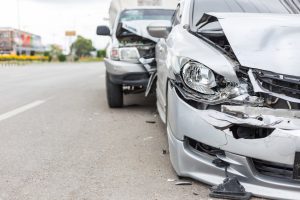
There are various different ways that a driver can be liable in a multi-vehicle accident. Travelling too close to the car in front can mean that you are not leaving enough braking distance. If the car in front had to stop suddenly this could have a domino effect. This is because the vehicle behind them may crash into them, then the vehicle behind may crash into that car, etc.
These accidents can be prevented by:
- Vehicles keeping significant space between each other. This is so that if a vehicle stops or crashes, the vehicle behind has time to brake.
- Driving at the speed limit. This is a legal requirement as it can help prevent accidents (or lessen the severity of potential accidents).
Multi-Vehicle Accidents Caused By Poor Weather
Poor weather means poor road conditions which have the potential to cause multi-vehicle collisions. Poor weather conditions, such as rain or fog, can make it hard for drivers to see the road properly. This could cause them to drive too close to the car in front of them.
Therefore, they may not allow themselves enough time to stop if the car in front suddenly brakes. Similarly, this could happen if they fail to see hazards on the road, such as a pothole or debris.
Alternatively, the driver may be able to see the road but poor weather may cause dangerous road conditions, such as ice or rain causing a slippery surface. If a driver does not leave extra room for braking when there are poor road conditions this may cause them to crash and could result in a multiple vehicle accident.
Calculate Compensation For Multi-Vehicle Accidents
If your road traffic accident compensation claim is successful, your settlement may comprise potentially two heads of claim. Firstly, we look at general damages that look to compensate for the pain and suffering caused by your injuries.
We’ve included a table including figures taken from the Judicial College Guidelines. The JCG is a document sometimes used by legal professionals to value what a claim could be worth, as it presents a list of injuries alongside guideline compensation brackets. You can find some examples of these brackets in the table below.
In 2021, the government introduced new legislation changing the way that drivers and passengers over the age of 18 can pursue compensation in certain road traffic accident claims for injuries that are valued at £5,000 or below. In accordance with the Whiplash Injury Regulations 2021, claims of this nature made in England and Wales must be made through the government’s online portal.
It’s important to note that none of the entries can be guaranteed since every claim is unique, and that the top figure is not from the JCG. Additionally, we’ve also provided two examples of the tariffs found in the Whiplash Injury Regulations as the last two figures.
| Injury | Severity | Guideline Compensation |
|---|---|---|
| Multiple very severe injuries with special damages | Very severe | Up to £1,000,000+ |
| Brain damage | Very severe (a) | £344,150 to £493,000 |
| Moderate (c)(i) | £183,190 to £267,340 | |
| Back | Severe (a)(i) | £111,150 to £196,450 |
| Moderate (b)(i) | £33,880 to £47,320 | |
| Neck | Severe (a)(i) | In the region of £181,020 |
| Moderate (b)(i) | £30,500 to £46,970 | |
| Leg | Severe (b)(i) | £117,460 to £165,860 |
| Less serious (c)(i) | £21,920 to £33,880 | |
| Whiplash injuries with psychological harm | Lasting between 18-24 months | £4,345 |
| Whiplash injuries | Lasting between 18-24 months. | £4,215 |
Compensation for the financial effect the injuries have had on you is known as special damages. It’s difficult to qualify for special damages without providing sufficient evidence to prove your financial loss. An example of this evidence could be bank statements to show that you spent money on prescription medication for your injuries.
We are here to help you
Here at UKlaw our expert advisors are on hand 24 hours a day 7 days a week to assess your compensation claim. Should you require free legal advice we can connect you to a specialist solicitor.
How Insurance Companies Could Attribute Who Is Liable In A Multi Vehicle Accident
Insurance companies will begin their own investigations to see who is liable in a multi-vehicle accident. Firstly, they may assess the timeline of the events that took place, as identifying what order the events took place can help significantly in understanding who caused the pile-up.
The police report can help identify the timeline of events and outline who may be negligent. Recovering costs from the other driver’s insurance companies can prove difficult when it’s unclear who is liable in a multi-vehicle accident.
If it’s found that more than one driver is at fault for the road traffic accident, a split liability claim may be introduced. So fault will be split. This can be between multiple drivers.
If you are making a personal injury claim when partially at fault for the accident this may mean you will only be awarded a reduced percentage of the compensation to take into account your part in the incident.
What evidence could support a multi-vehicle accident claim?
- Police reports: The police will accumulate a police report when they visit the scene of the accident.
- CCTV footage: CCTV footage from the accident can help determine who may be liable.
- Witness statements: Taking the details of any potential witnesses can be helpful. This ensures they can make a statement later on in the claim.
What Happens If The At-Fault Driver Doesn’t Have Enough Coverage or No Insurance?
A multiple-vehicle collision can result in significant damage to the vehicles involved. In the UK, it is required to have minimum third party insurance coverage. These policies cover the damage to other vehicles if you’re involved in a collision. But what if the other driver does not have enough coverage to cover your damages? Or worse still, was driving without insurance?
This is where uninsured/underinsured motorist policies can help you. You can add this as an optional extra to your insurance policy, and it will bridge the gap between what you receive from the other motorist’s insurance and the cost of damage to your car.
In cases where the other drivers have no insurance, fail to stop or the car is stolen, a claim will be made through the Motor Insurers’ Bureau (MIB). The MIB organisation is comprised of every insurance provider in the UK, and pays out compensation in claims made where a vehicle has no valid insurance. What this all means is that no matter the level of coverage held by the other drivers involved in the collision, you can seek compensation for both the damage to your car and your injuries if you weren’t at fault. Cases of split liability are examined further in the next section.
To find out more about who is liable in a multi-vehicle accident, and to get a free eligiblity assessment, contact our advisory team today via the contact information given below.
Split Liability Accident Claims
There are multiple ways that more than one driver could be liable in a multi-vehicle accident. For example, when the front vehicle has to stop suddenly but the vehicle behind and the vehicle behind that vehicle are not leaving enough room this can mean vehicles 2 and 3 are share some liability.
It may not always be clear who is liable or whether liability is shared in a road traffic accident. If you have any questions about liability for a multi-vehicle road accident call our trained advisors. They can assess your case and provide free legal advice with no obligation.
Time Limits To Make A Multi-Vehicle Accident Claim
The general personal injury claim time limit is three years. That counts as three years from the date of the accident or three years from when you realise your injuries are a result of someone else’s negligence. However, there are some exceptions to this rule.
If you’re under 18, the three-year time limit begins from your 18th birthday. Similarly, if you’re mentally incapacitated, the three-year time limit begins when your recovery commences. Alternatively, someone you trust can become a litigation friend to claim on your behalf if you’d like to claim earlier.
Claim For A Multi-Vehicle Accident On A No Win No Fee Basis
Our panel of personal injury lawyers can discuss working on a No Win No Fee basis with you. No Win No Fee is a contractual agreement between you and your solicitor in which you pay no upfront or ongoing fees to your solicitor.
If your case loses, you won’t have to pay any of your solicitor’s fees. If your case succeeds, your lawyer will take a success fee from your compensation. This fee consists of a small percentage with a legal cap.
To get in touch with our team of advisers, you can:
- Call 0800 953 0698. An adviser is readily available to chat with you.
- Chat with an advisor on the chat pop-up box. An adviser is ready to talk to you today.
- Start your claim online. Our team of advisers will respond as soon as possible.
Related Guides
- Learn about the road traffic accident claims process
- When and how to report a car accident
- Guidance on pedestrian accident compensation
Thank you for reading this article about who is liable in a multi-vehicle accident.


